Planning 101: How to Create Your First Weekly Planner Spread ✨
Hey lovely, welcome to the final post in our Planning 101 beginner series here on Planner Princess 💜
If you’ve made it this far — first of all, I’m so proud of you.
We’ve talked about:
- What planning actually is
- Different types of planners
- Beginner supplies
- Creating softer systems that support your life
And now?
It’s finally time to create your very first weekly planner spread ✨
If you’ve ever opened a blank planner page and immediately thought:
“I have no idea what I’m doing…”
Please know that’s completely normal.
Starting is often the hardest part.
But today I’m going to walk you through a simple, cozy, beginner-friendly weekly setup that feels supportive instead of overwhelming.
No perfection required.
No artistic skills required.
Just you, your planner, and a fresh start 💕
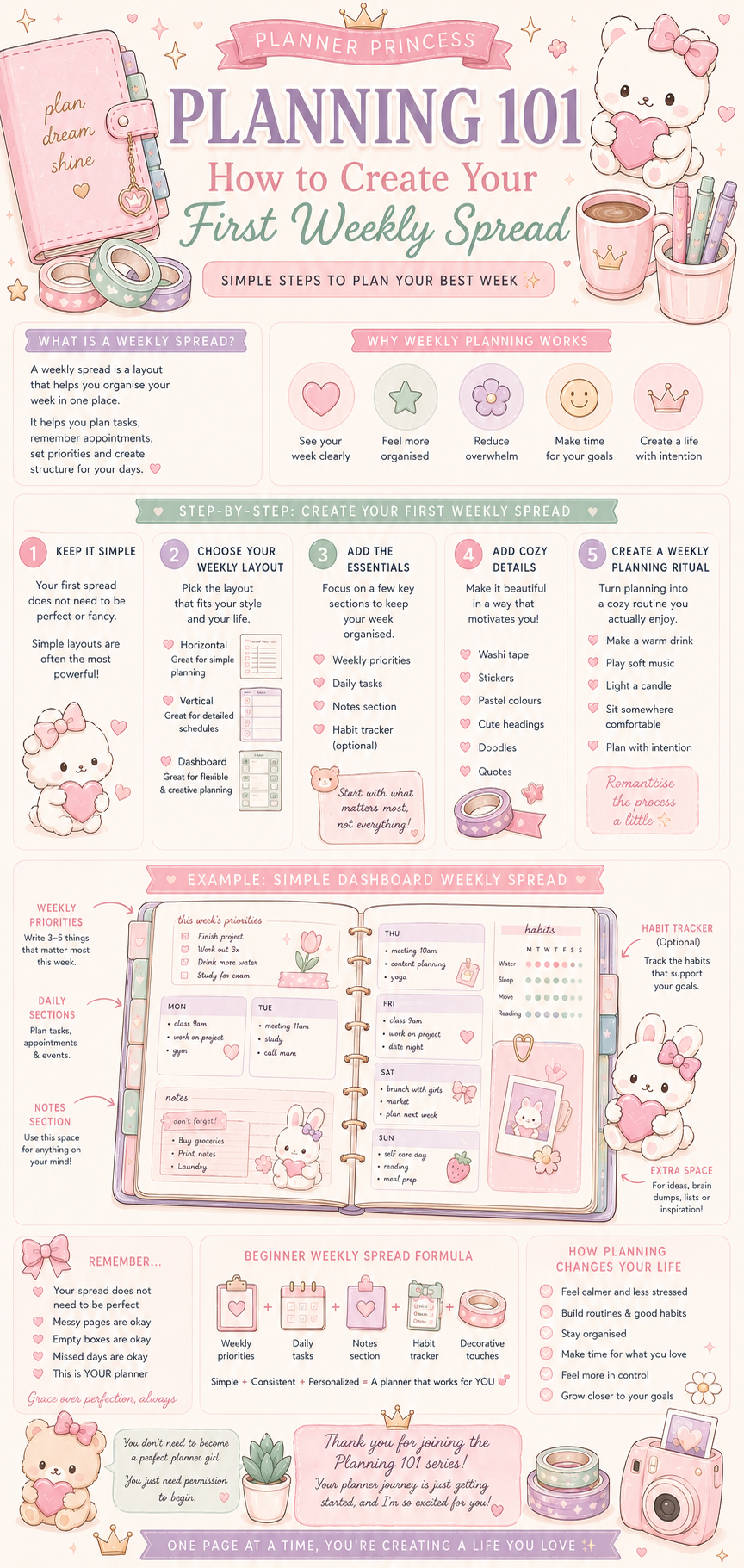
What Is a Weekly Spread?
A weekly spread is simply:
A layout that helps you organise your week in one place.
It gives you space to:
- Plan tasks
- Remember appointments
- Track routines
- Set priorities
- Organise your thoughts
- Create structure for your week
Weekly planning is one of the best beginner systems because it helps you see your week clearly without becoming too detailed.
Step One: Keep It Simple
This matters more than anything else.
When beginners start planning, they often try to recreate:
- Ultra complicated Pinterest spreads
- Perfect artistic layouts
- Highly detailed systems
And honestly?
That usually leads to burnout.
Your first spread does NOT need:
- Fancy calligraphy
- Huge sticker collections
- Perfect drawings
- Complicated layouts
Simple spreads are powerful.
Step Two: Choose Your Weekly Layout
There are lots of ways to structure a week.
Here are some beginner-friendly options:
Horizontal Layout
Each day has a simple horizontal box.
Perfect for:
- Quick notes
- Simple planning
- Minimal stress
Vertical Layout
Days are stacked vertically.
Perfect for:
- Time blocking
- Busy schedules
- Detailed routines
Dashboard Layout
A mix of sections:
- To-do list
- Habits
- Notes
- Weekly goals
Perfect for:
- Creative planners
- Flexible planning
- Cozy setups
For beginners?
Dashboard layouts are often the easiest and least overwhelming.
Step Three: Add the Essentials
You really only need a few core sections.
1. Your Weekly Priorities
Ask yourself:
“What matters most this week?”
Choose 3–5 priorities maximum.
Examples:
- Finish an assignment
- Clean your room
- Exercise twice
- Upload a blog post
- Drink more water
Keep it realistic.
2. Daily Tasks
Under each day, write:
- Appointments
- Important reminders
- Tasks
- Events
Don’t overcrowd your pages.
Leave space to breathe.
3. A Notes Section
This becomes your catch-all space.
Use it for:
- Brain dumps
- Shopping lists
- Ideas
- Reminders
- Random thoughts
Honestly?
This section saves planner lives.
4. Habit Tracking (Optional)
You can track:
- Water intake
- Sleep
- Reading
- Vitamins
- Workouts
- Mood
- Skincare
But don’t track 25 habits at once.
Start small.
Step Four: Add Cozy Details
This is where planning becomes fun ✨
Try adding:
- Washi tape
- Pastel colours
- Tiny stickers
- Cute headings
- Soft doodles
- Decorative boxes
- Cozy quotes
Remember:
Decoration is not required…
…but it can make planning feel comforting and motivating.
Step Five: Create a Weekly Planning Routine
Planning works best when it becomes a ritual instead of a chore.
Try creating a cozy planning session:
- Make a warm drink
- Light a candle
- Play soft music
- Sit somewhere comfortable
- Decorate your pages slowly
Romanticise the process a little.
Life feels softer when we allow ourselves small comforting routines.
Your Weekly Spread Does NOT Need to Be Perfect
This is your reminder:
- Crooked stickers are okay
- Messy handwriting is okay
- Empty pages are okay
- Missed days are okay
Your planner exists to support your life.
Not pressure you.
Some weeks will look beautiful.
Some weeks will be messy survival mode.
Both are valid.
Beginner Weekly Spread Formula ✨
If you want the easiest possible setup:
Weekly Layout
✔ Weekly priorities
✔ Daily task boxes
✔ Notes section
✔ Optional habit tracker
✔ Small decorative touches
That’s enough.
Seriously.
How Planning Slowly Changes Your Life
One of the most beautiful things about planning is that the changes often happen quietly.
Over time, planning can help you:
- Feel calmer
- Build routines
- Stay organised
- Reduce overwhelm
- Create consistency
- Make time for your goals
- Feel more connected to your life
Not because your planner is magical…
…but because intentional time creates intentional living.
Final Thoughts
And just like that…
You’ve completed the Planning 101 series 💜
I hope this series helped planning feel:
- More approachable
- Less intimidating
- More creative
- More gentle
- More fun
You never needed to become a perfect planner girl.
You just needed permission to begin.
Your planner journey is going to evolve over time.
Your style will grow.
Your routines will change.
Your systems will improve.
And that’s the beautiful part.
Planning isn’t about becoming perfect.
It’s about creating a life that feels a little softer, calmer, and more intentional — one page at a time ✨
Leave a Reply